.svg)
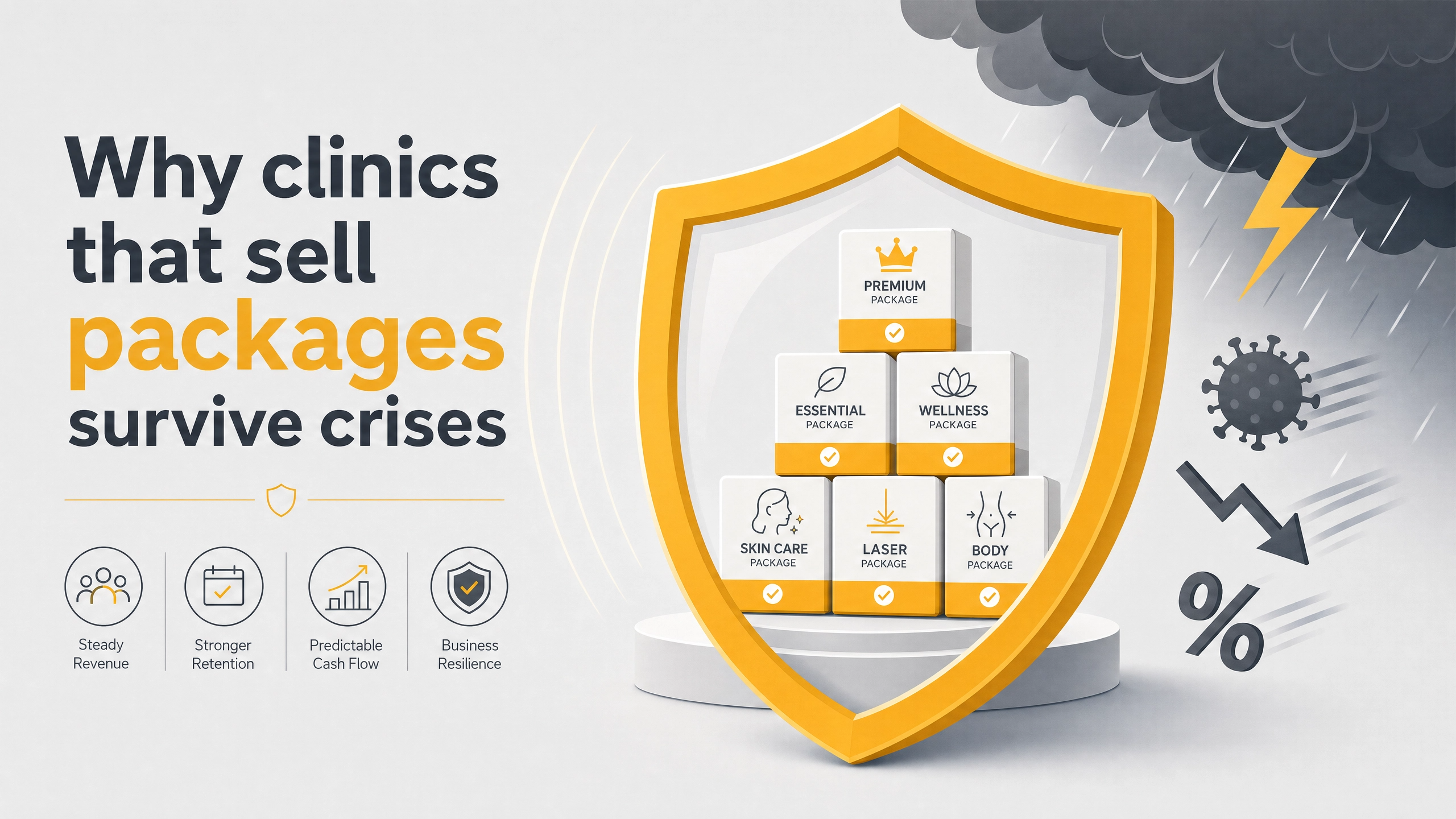
Imagine two aesthetic clinics in the same neighborhood. The doctors trained at the same institution. Pricing is similar. Yet at year-end, Clinic A has nearly twice the net profit of Clinic B. The difference isn’t skill. It isn’t location. It’s revenue structure.
Pay-Per-Visit vs. Package Revenue: What’s the Difference?
A pay-per-visit clinic must find new patients every month just to maintain its current revenue level. Every month starts from zero, making budget planning extremely difficult.
A package-based clinic has recurring revenue — income from patients who have already paid, even if they haven’t used all their sessions yet. That means far greater predictability.
Why Packages Help Clinics Survive Downturns
1. Upfront Cash Flow
When a patient buys a 10-session package, the clinic receives the full payment at once but delivers one session at a time. This means that during low-traffic periods — like the rainy season or an economic slowdown — the clinic still has cash flow because there are “pending services” already in the system.
2. Higher Patient Loyalty
Patients who have already purchased a package are far less likely to switch to another clinic, because they still have sessions left. Psychologically, they are more committed to your clinic than someone who pays per visit.
3. Lower Customer Acquisition Cost
Upselling packages to existing patients costs 5–7x less than acquiring new patients. Clinics with a good package management system can track how many sessions a patient has used and send timely reminders when a package is running low.
“Clinics with more than 40% of revenue from packages showed 60% less revenue volatility than pay-per-visit clinics during market slowdowns.”
Which Package Types Sell Best in Thai Clinics
Session Packages
The classic format — e.g., 5 Botox sessions at a special price. Ideal for services that require repeated treatment. The selling points are a lower per-session cost and a clear commitment.
Monthly Plans
Growing in popularity among wellness and skincare clinics. Patients pay monthly for a set number of services. It creates a membership feel that adds perceived value.
Combo Packages
Bundling multiple services together — e.g., Facial + Filler + Follow-up at a bundle price. This raises average ticket size and lets patients try services they haven’t experienced before.
Starting to Sell Packages: How to Do It Right
- Choose services suited to the package model — services that require repetition, like laser, botox, or filler maintenance, work best.
- Set a discount that still maintains margin — a 10–15% per-session discount is the sweet spot: attractive to buyers, still profitable.
- Have a tracking system — if you don’t know how many sessions a patient has used, problems will follow.
- Train your team to offer packages at the right moment — the best time is right after a treatment, when the patient is happy with the results.
- Set a reasonable expiry date — long enough that patients feel comfortable, short enough to drive consistent visits.
Summary
Between Clinic A whose revenue rises and falls with daily patient count, and Clinic B with a recurring revenue base from packages — Clinic B is far more stable and can plan for the long term. Building a balanced revenue structure between pay-per-visit and packages is the foundation that every strong clinic shares.
Manage Packages Like a Pro
OneClinyx has a Package Management system that tracks sessions, sends renewal alerts, and reports package revenue separately with full clarity.
Try Free for 30 Days →